

The right glue is the quiet difference between a book nook that holds together cleanly and one that pops apart or ends up smudged with marks.
The good news is that you do not need a shelf full of adhesives to get it right. For almost every book nook and miniature kit, two or three glues cover everything, and choosing between them is simpler than it first looks once you know which glue suits which material. This guide runs through the glues worth knowing, what each one is best for, which parts of a build call for which glue, and how to apply it cleanly so none of it shows. If you would like to see where gluing fits into the whole process, our guide on how to build a book nook walks through the full build.
But, if you are buying the kit from us, we have got you covered and you do not have to worry about it.
Do you actually need glue for a book nook?
Not always, and it is worth checking before you buy anything. Some kits are designed to snap together with snug joints and need no glue at all. Many kits include a small tube of basic glue in the box, which works perfectly well for a first build. Others expect you to supply your own, or ship without glue because couriers restrict some liquids and adhesives. So the honest first step is to read what your kit includes. This guide is for the times when you need to supply glue yourself, or when you want a neater, sturdier finish than a basic included glue tends to give. If you are still choosing a kit, our shortlist of the best book nook kits for beginners notes what each one needs.
The glues worth knowing, and what each is best for
There are only a handful of glues that matter for this hobby. Learn what each one does well and you can build almost anything.
PVA or white wood glue, your everyday workhorse
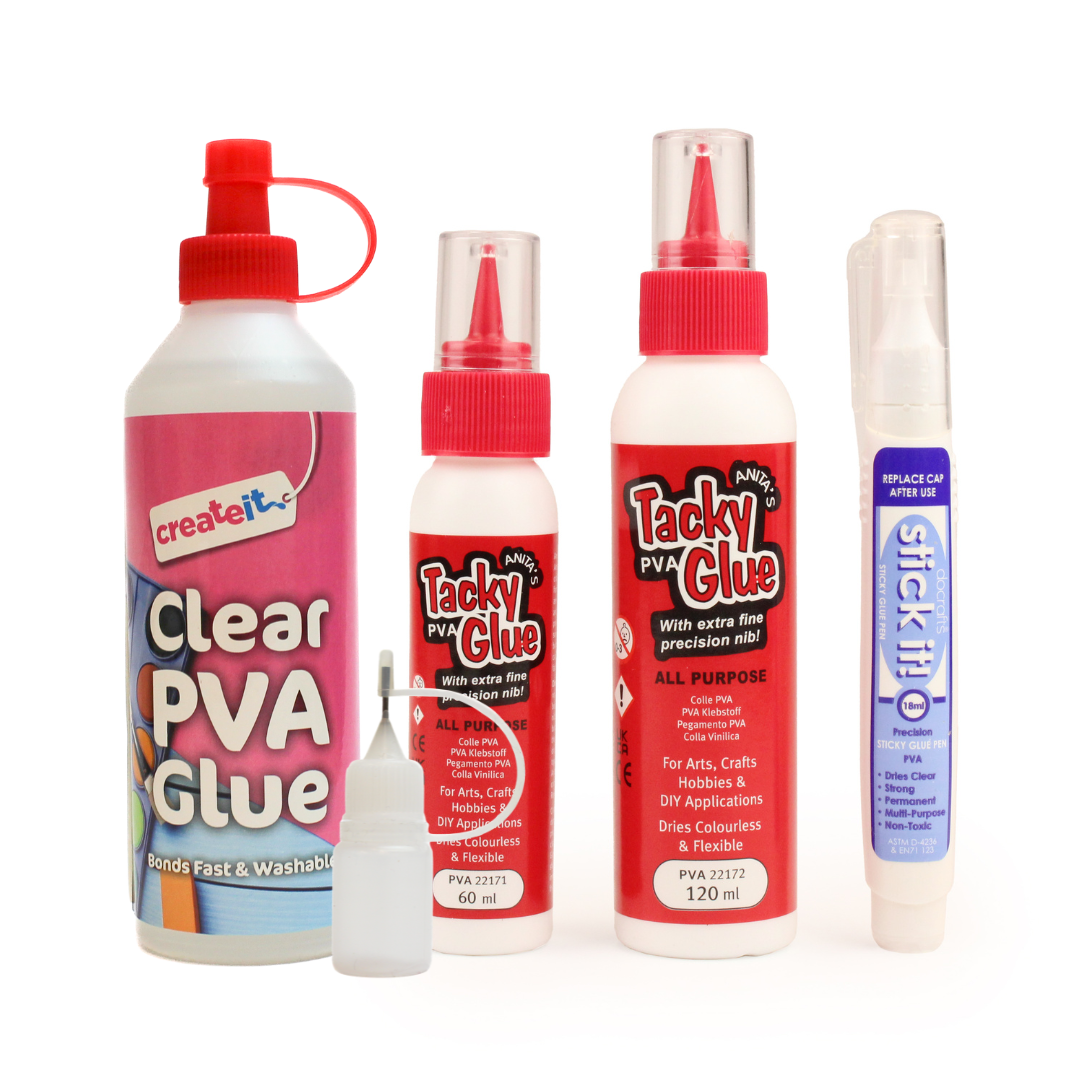
If you buy only one glue, make it this. PVA, sold as white glue or wood glue, bonds wood to wood and paper to wood reliably, dries clear so it leaves no visible line, and sands cleanly if you ever need to tidy an edge. It is forgiving too, giving you a few seconds to nudge a piece into place before it sets. The only rule is to apply it sparingly, since too much can seep out or warp thin paper. For the walls, the floor and most of the structure of a book nook, this is the glue you will reach for most.

Tacky glue, the best all rounder for control
Tacky glue is a thicker cousin of PVA, and many experienced builders rate it as the best single glue for book nooks. Because it is thick, it grabs quickly and holds small or upright pieces in place without them sliding while they dry, yet it still gives you a moment to position them first. It dries clear and works on paper, card, fabric and small wooden details alike. If you find ordinary white glue too runny for fiddly parts, tacky glue is the upgrade that makes the whole build feel calmer.
Super glue, fast and strong for small joins
Super glue, also called cyanoacrylate or instant glue, bonds in seconds and grips hard, which makes it ideal for tiny details and tricky joints where you cannot hold a piece for long. It comes with a few cautions, though. It sets instantly, so there is no room to reposition once parts touch. It bonds skin just as fast as it bonds wood, so keep your fingers clear. And it can leave a faint white frosting on nearby surfaces, so use a small amount in a well aired spot. Treat it as your precision tool rather than your main glue.
Glue for clear and acrylic parts
The little clear windows in a book nook need special care, because the wrong glue ruins them. Never use super glue on or near clear acrylic, since its fumes cloud the surface with a permanent milky haze. Instead reach for a clear drying PVA or a clear craft glue, apply a tiny amount only at the edges where it will be hidden, and fit the clear pieces carefully. A little patience here protects the see through magic that makes the scene glow.
Glue stick, only for flat paper
A glue stick has one good use in this hobby, which is sticking down thin, flat paper overlays without wrinkling or soaking them. It is gentle and tidy for that job. It is not strong enough for any structural joint, though, so do not be tempted to build walls with it, as the joints will quietly pop open later.

Which glue to use for each part of your nook
To make this easy to remember, here is a simple way to match the glue to the part. For the wooden frame, the walls and the floor, use PVA or wood glue, or tacky glue if you want more grip. For flat paper and card textures, use a glue stick or a thin layer of PVA, applied sparingly so the paper stays flat. For the small details such as lanterns, signs and furniture, tacky glue gives the best control, with a tiny dot of super glue for anything that needs to hold instantly, kept away from clear parts. For the clear windows, use a clear craft glue or PVA, never super glue. And if a piece ever breaks later on, mend a clean wooden break with a dot of super glue and a larger joint with wood glue. To tuck away the thin LED wires out of sight, a small dab of glue or a piece of tape does the job, which we cover in our guide to how to add and hide the lights.
How to glue a book nook cleanly
Good gluing is mostly about restraint and a little patience. The single most useful habit is to use less than you think you need, because a thin bead holds well while a thick one squeezes out and leaves marks. Apply it precisely with the nozzle tip, or with a toothpick for the fiddly bits, rather than straight from a large bottle.
Always dry fit a piece first, holding it in place without glue to check it sits right and faces the correct way, since a piece fixed the wrong way round is a misery to undo. Once glued, wipe away any excess straight away with a slightly damp cloth before it sets. Hold the joint for a few seconds, or use a small pair of cross locking tweezers as a tiny clamp while it grips. Then let each joint settle before you add weight or stress to it. Keep super glue well away from your fingers and from the clear parts, and use it somewhere with a little airflow. None of this is difficult, and after the first few joints it becomes second nature. A few simple tools make all of it easier, which we cover in our guide to the tools you actually need.
How long does the glue take to dry?
Drying time is the other half of gluing well, and rushing it tends to undo good work. PVA and tacky glue grab within a few minutes but reach full strength only after several hours, so it is wise to leave a freshly glued joint alone for a while, and to let the whole build settle overnight before you stand it up or move it to a shelf. Super glue is the opposite, setting in seconds and holding firmly almost at once, which is exactly why it suits the small parts you cannot keep still for long. A clear craft glue on the windows sits somewhere in between, so give it a little time before you handle the clear pieces. When in doubt, wait longer rather than less, since a joint that has fully cured is far stronger than one you stressed too soon.
Glues to avoid, or use with care
A few popular glues cause more trouble than they are worth on a build this small. Hot glue is the main one to leave in the drawer, since it dries in thick blobs, shows badly on fine work, and can even melt thin paper and delicate parts. A plain school glue stick is fine for flat paper but far too weak for any joint that holds the structure together. Super glue, useful as it is, should be kept away from clear acrylic and used in small amounts to avoid the white frosting it can leave. And two part epoxy, while very strong, is overkill for almost every book nook and is messy to mix, so save it for the rare heavy part that genuinely needs it.
A quick word on safety
Glue deserves a little respect, especially the fast acting kind. Super glue bonds skin in seconds, so if your fingers stick together, do not pull them apart, and instead ease them free gently with a little acetone or nail polish remover. Keep all glues away from your eyes and mouth, work somewhere with a bit of fresh air when using super glue, and store everything out of reach of small children. This is one of the reasons most kits are recommended for ages fourteen and up.
Frequently asked questions
What glue is best for book nooks?
For most builds, PVA or white wood glue is the best all rounder, since it bonds wood and paper, dries clear and is forgiving. Tacky glue is an excellent choice for small and upright pieces because it grips faster, and a thin super glue is handy for tiny instant joins.
Can you use super glue on a book nook?
Yes, for small details and tricky joints where you need an instant hold. Use a small amount, keep it off your skin, and never use it on or near the clear acrylic windows, as it can cloud them.
What glue should I use for the clear windows?
Use a clear drying PVA or a clear craft glue, applied only at the hidden edges. Avoid super glue here, since its fumes leave a permanent milky haze on clear acrylic.
Do you need glue if the kit snaps together?
No. Some kits are designed to press together with snug joints and need no glue at all. A little glue can still add strength at a few points if you want it, but it is optional on those kits.
Will white glue dry clear on a book nook?
Yes. PVA and white wood glue dry clear, which is why they are so well suited to this hobby. Apply them sparingly so none seeps out, and any small amount that does will dry almost invisible.
How do you fix a broken book nook piece?
For a clean break in a wooden piece, a dot of super glue sets it quickly. For a larger joint, wood glue gives a stronger, more forgiving repair. Hold the piece steady while it sets, and wipe away any excess before it dries.
The short version
If you remember nothing else, keep a bottle of PVA or wood glue and a tube of thin super glue on hand, add tacky glue when you want more control on small parts, and use all of them sparingly. Get that right and gluing becomes the easy part of the build rather than the worry. When you are ready to put it into practice, our guide on how to build a book nook takes you through the whole process, and you can find a gentle first build in our book nook collection.
0 comments